Turning WeChat into an open referral platform for everyone in real-estate agency
A multi-tenant SaaS platform that let anyone in Nanchang refer a property buyer and be paid for it — run entirely through a WeChat official account.
- Client
- Tianrui Enterprise
- Industry
- Real estate marketing and sales management
- Location
- Jiangxi, China
- Period
- 2015 – 2017
- Engagement
- 80 weeks build, then 2 years in production
- Services
- Enterprise software · Web development · Chinese platforms
- Delivered by
- imady Suzhou Limited
The problem
What was in the way
The client wanted every resident, owner and passer-by to be able to introduce a buyer and be paid for it — but had no way to prove who introduced whom. Referrals arrived by phone call and word of mouth, were recorded on paper at the sales office, and were reconciled into commission by hand weeks later, which meant disputes could not be settled and the scheme could not be trusted at scale. In 2015 China the referrers themselves were the harder constraint: they were ordinary people who would never install a company app, and any channel requiring registration, training or a download would have lost them at the first step.
The approach
What we built, and why that shape
We made the referral itself the unit of record. Every introduction became a tracked case moving through an explicit sequence of states — introduced, contacted, visited, accompanied, under contract, settled — with each transition confirmed at the sales office rather than claimed afterwards, so a commission could always be traced back to the evidence that earned it.
- A WeChat official account, not an app, was the referrer's entire interface: share a link, see your cases, watch the fee accrue. Zero install, zero training — the only design that fit the people the scheme depended on.
- Commission was an approval workflow, not a spreadsheet: request, approve, pay, each as a recorded node with an approver and a timestamp.
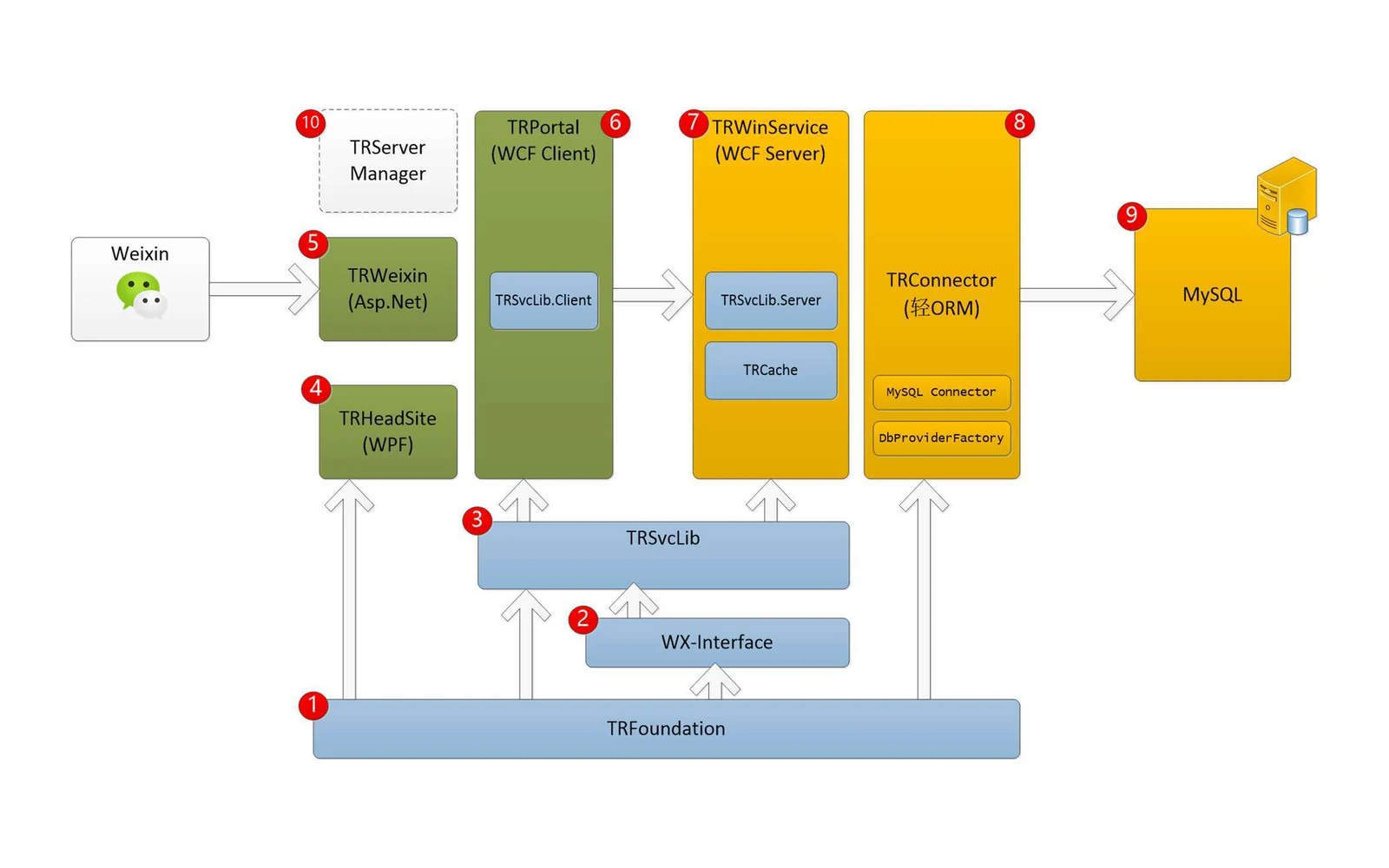
- We built the ORM, workflow engine and authorisation layer in-house (TRDataConnector, TRWorkflow, TRPower). On .NET Framework 4 the alternatives were heavyweight and hard to fit to Chinese property workflows — the trade-off was long-term maintenance in exchange for a system that matched the business exactly.
- Deliberately not built: a public listing marketplace and a native mobile app. Both would have doubled the budget and neither would have added a single referral.
The outcome
What changed
The scheme became something the client could run at scale and defend when questioned. Over two years in production the platform carried the referral, approval and payout record for the client's developments, and every fee paid could be traced to a specific introduction and a specific confirmed visit.
The handover
What the client received
Requirements-led with agile iteration. The handover was a complete package, not just a running system — the client could have taken it to another vendor the next day.
- Source code, and a signed contract that assigned it
- Installer for the WPF admin client
- User manuals for both the desktop client and the WeChat client
- Design documents covering the major workflows
- Developer wiki, dev log, and a deploy manual
- Deployment credentials
Built with