imady — I made it.
The words
It is a phonetic pun, and an intentional one. "I made it" is what every maker — engineer, designer, composer, founder — wants to say at the end of a long week. The slogan extends the thought: a place where individual creativity meets technology, and where passion finds a shared stage.
The colours
The colours come from the original 2010 mark: red for the urgency of making, green for the field we work in.
The lineage
That mark was first used by imady Suzhou Technologies, founded in China in 2010, which built enterprise software, mobile products and early VR and AR work for clients across Asia. imady NZ Limited was registered in Auckland in 2019 — the current home of the practice, and a deliberate decision to work from New Zealand on a wider set of problems.
About
An indie studio built to do serious engineering.
imady NZ Limited works with New Zealand organisations on software that is designed for them specifically — and advises those doing business across the China market on the digital platforms they have to operate in.
Why we exist
Mission & vision
97% of New Zealand businesses employ fewer than twenty people. Most are running on systems that cost more than they should and do less than they could — not through any fault of their own, but because the market has been built around organisations ten times their size.
Source: Ministry of Business, Innovation & Employment, “Small business and manufacturing” — small businesses (fewer than 20 employees) make up around 97% of all New Zealand enterprises and contribute about 42% of total economic value. MBIE
To bring capable software within reach of New Zealand's smallest businesses — the ones with no IT department, no developer on staff, and no budget for the agency rates that assume both.
A New Zealand where a six-person business can run on software as good as a six-hundred-person one, and where adopting a new technology does not require first hiring someone to understand it.
Lower what ICT costs to own
Not by buying cheaper software, but by removing the duplication: overlapping subscriptions, manual re-entry between systems, and the licences nobody has audited in three years. The saving is usually structural, and it recurs every month.
Put AI where it improves the customer's experience
Faster quotes, questions answered at the moment they are asked, fewer things falling through. We are interested in the applications your customers would notice — not the ones that only look good in a demonstration.
Price for the businesses we are here to serve
Staged scopes, fixed fees where we can commit to them, and an honest first conversation about whether the return justifies the spend. A proposal you decline costs us a few hours; a project that does not pay for itself costs you far more.
Build so that you are not dependent on us
Documentation, source code and accounts are yours throughout. Independence for a small business is not a nicety — it is what keeps the next quote honest, ours included.
AI in practice
How we use AI.
Not as a talking point. These are the four places where it changes what your software can do, and what it costs you to own.
Doing business in China, without a bilingual team.
Translation is the least of it. The harder gap is idiom, platform convention and regulatory phrasing — what makes a WeChat mini-programme read as native rather than as a foreign import. AI closes enough of that gap that a New Zealand business can enter the market without first hiring for it, and it lets us check our own work in both directions.
Software that does not make the customer guess.
A conventional menu assumes the user already knows the word the software chose. A language interface does not: the customer describes what they want in their own words, and the system finds the function. For people who did not grow up with computers or smartphones — older customers above all — that is the difference between software that is used and software that is merely installed.
Projects that would not otherwise have been affordable.
AI absorbs the slow, repetitive half of building software. What that changes is not our margin — it is the threshold: systems that were only ever viable for organisations ten times your size are now within reach of a six-person business, on a budget that would previously have bought a brochure website.
Capabilities conventional software never had.
Visual recognition and tracking, comprehension of documents and speech, generation of text and structured data. These open categories of work — inspection, triage, drafting, monitoring — that used to require a person sitting and watching.
How we build with it
A person is responsible for every line.
Engineered, not generated
AI accelerates the engineer; it does not replace them. Everything we deliver is read, tested and understood by a named person who can explain why it works — because the day something breaks, you need someone who knows the system, not a transcript of how it was produced.
Supervised end to end
We do not hand a codebase to an unsupervised pipeline and merge whatever comes back. Today's models are confident when they are wrong, and they lose sight of the earlier half of a large system. Both are manageable under supervision and dangerous without it — and a small business is the worst place to discover that.
Which is why we can quote a fixed fee
Work that is directed by a person has a scope that can be estimated in advance. That is what lets us commit to a fixed price on projects others will only price by the hour.
How we work
Four commitments.
We say no.
If a project is not right for us, or you would be better served by an existing product, we will tell you rather than take the work.
You own everything.
Source code, documentation, credentials, accounts. From the beginning, not at the end.
We build for whoever maintains it next.
Which may not be us. Structured, documented, and free of tricks that only the author understands.
Small and staged.
Every engagement is divided into stages that each deliver something usable, so nothing requires a leap of faith.
Who you will be working with
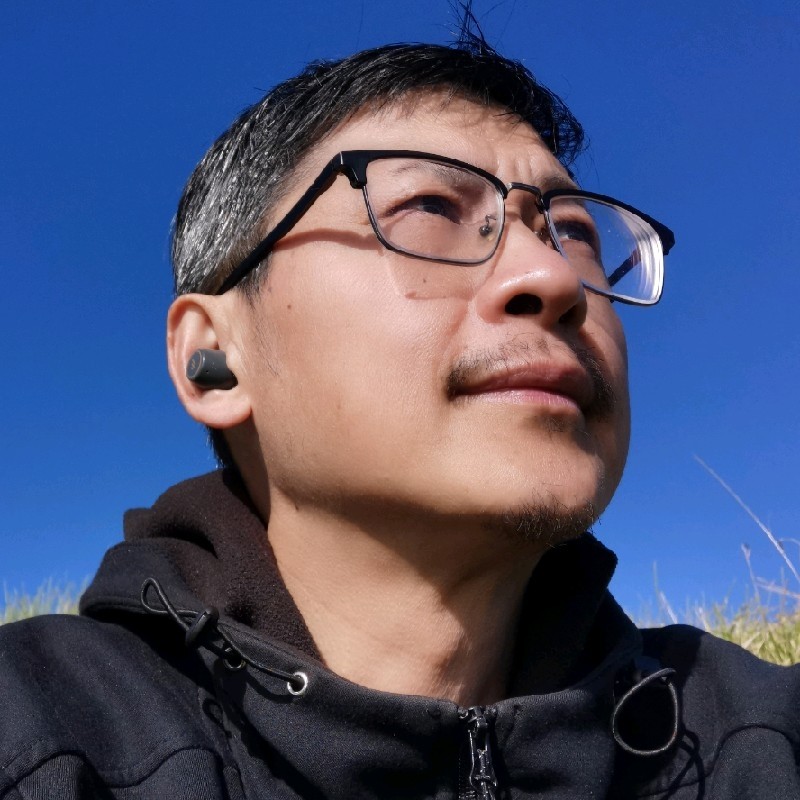
Frank Shen
Co-Founder & Director
Frank has been writing software since 1986. Twenty years across commercial marketing, product management and software engineering, including work at Dolby Laboratories, 3M and Kodak. He works in C# and .NET on enterprise systems, in React on the web, and in Unity on interactive and immersive applications.
He holds a degree in Electronic Engineering, an MBA, and a Master of Software Engineering.
That combination is the point. Most engineering problems in a small business are not really engineering problems — they are problems of understanding what the business is trying to do. Frank has sat on both sides of that conversation.
Company details
Registered name
imady NZ Limited
Company number
7742321
NZBN
9429047699878
Incorporated
24 September 2019
Industry classification
M700020 — Computer programming service
Location
Auckland, New Zealand
Let's talk about what you're trying to build.
A thirty-minute conversation costs you nothing and usually clarifies more than a written brief.
Get in touch